𝑺𝒐𝒎𝒆𝒕𝒊𝒎𝒆𝒔 𝒕𝒉𝒆 𝒄𝒐𝒍𝒍𝒊𝒔𝒊𝒐𝒏 𝒊𝒔𝒏’𝒕 𝒕𝒉𝒆 𝒈𝒓𝒆𝒂𝒕𝒆𝒔𝒕 𝒑𝒓𝒐𝒃𝒍𝒆𝒎. 𝑺𝒐𝒎𝒆𝒕𝒊𝒎𝒆𝒔 𝒊𝒕’𝒔 𝒘𝒉𝒂𝒕 𝒉𝒂𝒑𝒑𝒆𝒏𝒔 𝒊𝒏 𝒖𝒔 𝒂𝒇𝒕𝒆𝒓𝒘𝒂𝒓𝒅.
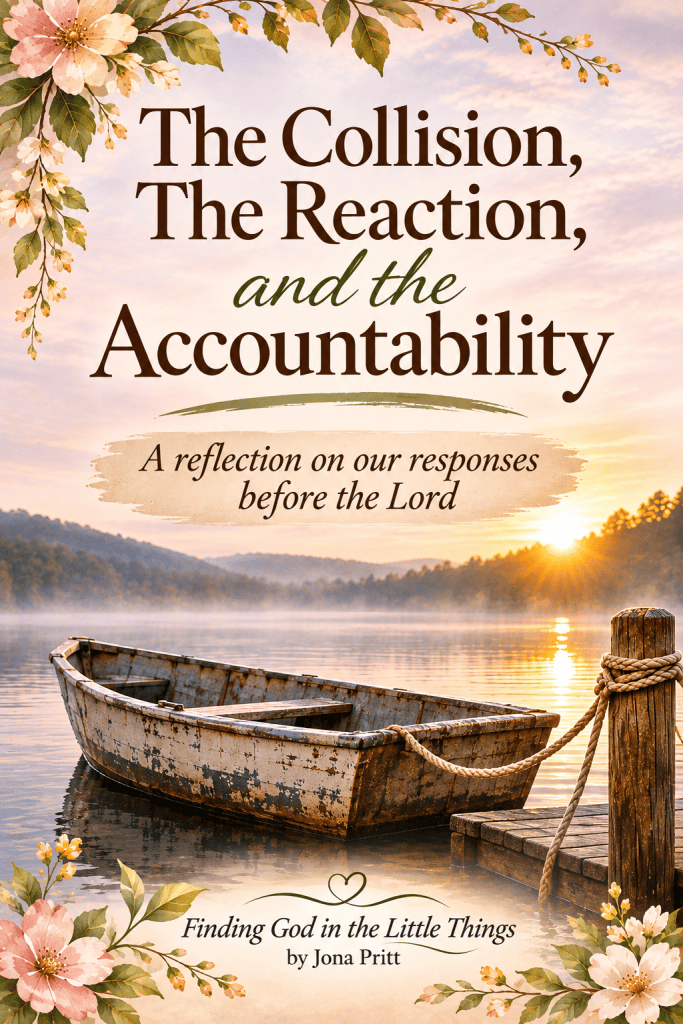
There is a story about a monk sitting quietly in a boat on a lake. He was enjoying the stillness, the quiet, and the solitude when another boat came drifting toward him.
Before he could move out of the way, the boats collided.
His immediate reaction was anger. He was frustrated that someone had been careless enough to interrupt his peace. He was ready to express his displeasure toward whoever was responsible.
But when he looked up, he discovered something unexpected.
The other boat was empty.
There was no one to confront. No one to blame. No one to direct his anger toward.
And that changed everything.
The collision hadn’t changed. What changed was his understanding of it.
I’ve thought about that story quite a bit because there is something in it that reaches beyond a simple encounter on a lake.
How often do we react before we understand? How quickly do we assign motives, make assumptions, and prepare our responses before we have all the information?
Someone says something that rubs us the wrong way. Someone makes a decision we don’t agree with. Someone’s actions inconvenience us, disappoint us, or hurt us.
And almost immediately, something rises within us.
We react.
Sometimes our reaction is justified in our own minds. After all, we didn’t start it. We didn’t cause the problem. We are simply responding to what someone else did.
But is that where our responsibility ends?
I don’t believe it is.
𝐓𝐡𝐞 𝐜𝐨𝐥𝐥𝐢𝐬𝐢𝐨𝐧 𝐚𝐧𝐝 𝐭𝐡𝐞 𝐫𝐞𝐚𝐜𝐭𝐢𝐨𝐧 𝐚𝐫𝐞 𝐭𝐰𝐨 𝐝𝐢𝐟𝐟𝐞𝐫𝐞𝐧𝐭 𝐭𝐡𝐢𝐧𝐠𝐬.
We may not have control over every collision we encounter in life. We cannot control another person’s words, choices, attitudes, or actions. We cannot always prevent misunderstandings or keep someone from hurting us.
But we do have a responsibility for what happens within us and what comes out of us.
James 1:19-20 reminds us to be swift to hear, slow to speak, and slow to wrath. It goes on to tell us that the wrath of man does not produce the righteousness of God.
That’s worth sitting with for a moment.
Being hurt doesn’t give us permission to hurt someone else. Being misunderstood doesn’t give us permission to respond carelessly. And being on the receiving end of someone’s poor judgment doesn’t excuse our own.
Sometimes the hardest part of accountability is being willing to look at our own response when we feel someone else was clearly in the wrong.
It’s easy to replay what someone said. It’s easy to rehearse what we should have said in return. It’s easy to remember every detail of what they did.
But how often do we go back and examine ourselves?
What did I say?
How did I respond?
Was my tone appropriate? Were my words necessary? Did I respond out of wisdom, or did I respond out of wounded pride?
And perhaps the most important question:
𝐖𝐨𝐮𝐥𝐝 𝐭𝐡𝐞 𝐋𝐨𝐫𝐝 𝐡𝐚𝐯𝐞 𝐛𝐞𝐞𝐧 𝐩𝐥𝐞𝐚𝐬𝐞𝐝 𝐰𝐢𝐭𝐡 𝐭𝐡𝐞 𝐰𝐚𝐲 𝐈 𝐫𝐞𝐬𝐩𝐨𝐧𝐝𝐞𝐝?
Romans 14:12 tells us that each of us will give an account of himself to God.
That is a sobering thought.
One day, we will stand before the Lord. We won’t be able to redirect the conversation toward someone else’s failures. We won’t be able to justify every careless word by explaining what someone else did first.
We will give an account of ourselves.
That doesn’t mean we ignore wrongdoing, pretend hurt doesn’t exist, or accept responsibility for things we didn’t do. There are times when boundaries are necessary, truth needs to be spoken, and difficult conversations need to take place.
But even in those moments, we are responsible for the spirit in which we respond.
There is a difference between standing for what is right and allowing our emotions to take control.
There is also a difference between conviction and condemnation.
When the Holy Spirit brings something to our attention, we have a choice. We can defend ourselves, make excuses, and keep pointing toward the other person. Or we can be honest enough to say, “Lord, I didn’t handle that well. My words were wrong. My attitude was wrong. Help me make this right.”
Sometimes making things right means going back and apologizing. Sometimes it means correcting something we said. Sometimes it means extending grace when we would rather hold on to our offense.
And sometimes, after we have done what we can, we have to leave the rest in God’s hands.
We cannot always repair what has been broken. We cannot make someone understand our intentions. We cannot undo every consequence of a careless reaction.
But we can take responsibility for our part.
Perhaps that’s one of the greatest lessons in that empty boat.
The collision was real. The interruption was real. But the anger that rose within the monk had nowhere to go once he realized there was no one to blame.
It makes me wonder how many of our reactions would look different if we paused long enough to consider what we actually know, what we are assuming, and what the Lord expects of us.
The next time life brings an unexpected collision, perhaps we should pause before responding.
Before assigning blame, pause.
Before speaking, pause.
Before allowing hurt to become anger, pause.
And ask ourselves whether our response reflects the One we claim to follow.
Because accountability isn’t just about acknowledging what someone else did.
It’s about being willing to examine what we did with it.
𝐓𝐡𝐞 𝐜𝐨𝐥𝐥𝐢𝐬𝐢𝐨𝐧 𝐦𝐚𝐲 𝐧𝐨𝐭 𝐡𝐚𝐯𝐞 𝐛𝐞𝐞𝐧 𝐨𝐮𝐫𝐬 𝐭𝐨 𝐩𝐫𝐞𝐯𝐞𝐧𝐭, 𝐛𝐮𝐭 𝐭𝐡𝐞 𝐫𝐞𝐚𝐜𝐭𝐢𝐨𝐧 𝐢𝐬 𝐨𝐮𝐫𝐬 𝐭𝐨 𝐬𝐮𝐫𝐫𝐞𝐧𝐝𝐞𝐫 𝐭𝐨 𝐭𝐡𝐞 𝐋𝐨𝐫𝐝.
And ultimately, that’s where accountability begins.
—
𝐀 𝐏𝐑𝐀𝐘𝐄𝐑
Lord, help me to be mindful of my reactions. When I am hurt, frustrated, misunderstood, or inconvenienced, remind me to pause before I speak. Give me the humility to recognize where I am wrong, the courage to make things right, and the grace to respond in a way that honors You. May my words, my actions, and even my attitudes reflect a heart that is accountable to You. Amen.
Finding God in the Little Things
By Jona Pritt