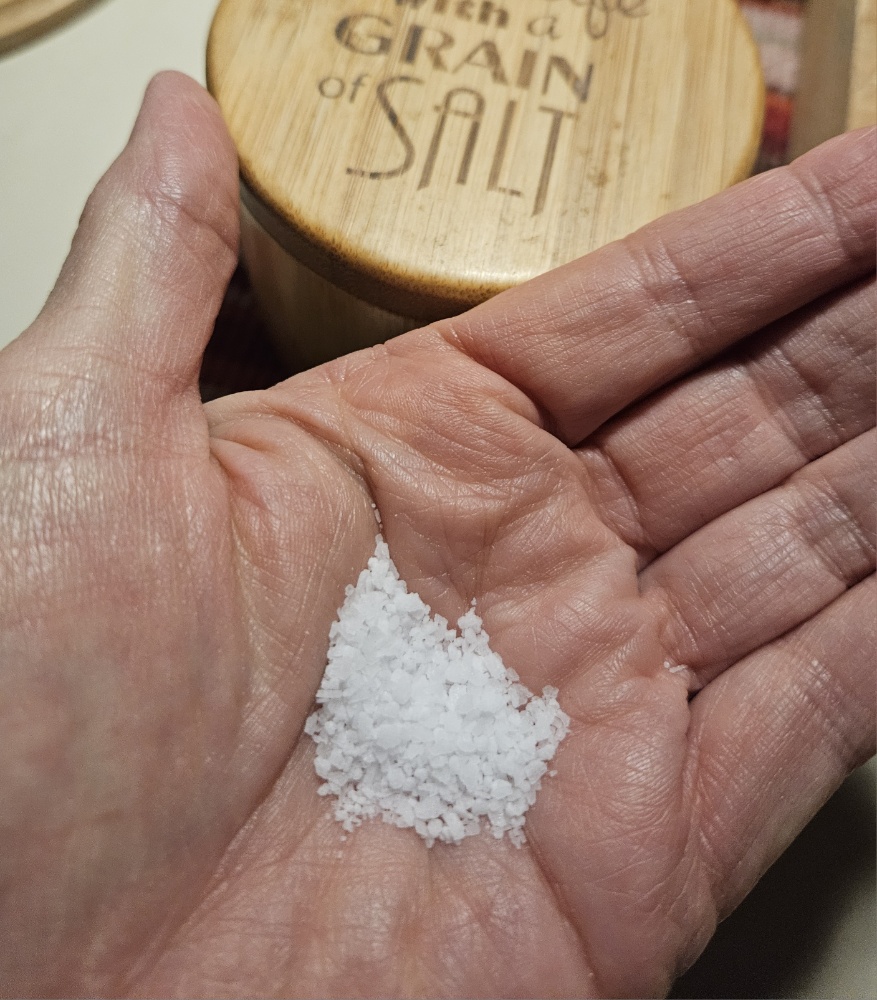
Standing at the kitchen counter with flour dusting my hands, my son Ryan and I got to talking about the humble pinch of salt sitting in the small dish beside the bowl. I was reminding him that true sourdough—simple as it looks—needs only three basic elements: flour, water, and salt.
Working together in the kitchen has a way of stirring up old memories. As we prepped the dough, we ended up talking about some of the meals we ate years ago when money was tight and how we relied on the Food Bank a few times to get by. I remembered how those donation boxes would sometimes surprise us with things I could never afford on our tight budget—like sweet cinnamon rolls that felt like a special feast to a young mom and her kids. It wasn’t what we would have chosen for our lives, but looking back, God always provided a little sweetness in the middle of the struggle.
That’s when the conversation turned to the salt itself, and my son shared a bit of chemistry that completely caught me off guard. It was information I had no idea about, but the more I listened, the more fascinating it became.
In chemistry, table salt is formed from two simple elements: sodium and chlorine. On their own, both are harsh, unstable, and overwhelming. Pure sodium reacts vigorously upon contact with moisture, and chlorine is a volatile gas that does more harm than good. If you encountered either element by itself, it would be far too strong to handle.
Yet, when those two elements come together, they yield their fierce independence. They form an ionic bond—a gentle, stable structure. What was once dangerous and raw becomes a quiet blessing that preserves food, balances flavor, and brings life to our daily bread.
Looking across the counter, I saw the spiritual truth in what he was describing.
Over the years, Ryan and I have talked through those early, rough chapters of our life—the shelter, the hard living situations, and the poor decisions I made as a young mother just trying to keep us afloat. On their own, those memories can feel like harsh elements. Left to themselves, they could easily taste bitter or heavy.
But God doesn’t discard our raw, imperfect seasons. In His quiet grace, He takes the harsh ingredients of our past, binds them with His mercy, and turns them into something stable and redeemed. He smooths out our sharpest edges and preserves us through the wilderness.
Throughout Scripture, salt represents that same enduring covenant. In Leviticus 2:13, God asked that every offering be seasoned with “the salt of the covenant”—a reminder of an everlasting promise that does not spoil or fade. And in 2 Kings 2, when the prophet Elisha was asked to heal a bitter, unfruitful spring, he simply cast a bowl of salt into the water. God healed the spring right where it flowed, turning a place of struggle into a source of life and refreshment.
When Jesus looked at His followers and said, “You are the salt of the earth” (Matthew 5:13), I think He was reminding us of what He can do with a yielded life. He takes our humble past, our sparse meals, and even those sweet Food Bank cinnamon rolls, and weaves them into a story of His goodness.
The next time you sprinkle a pinch of salt onto a meal at your table, take a moment to savor the quiet miracle inside those tiny white crystals. What started as restless, dangerous elements found peace together—just as we find our true rest and our healing when we yield our whole story into the Father’s hands.